
INTERSTELLAR TITLE SEQUENCE
DESCRIPTION
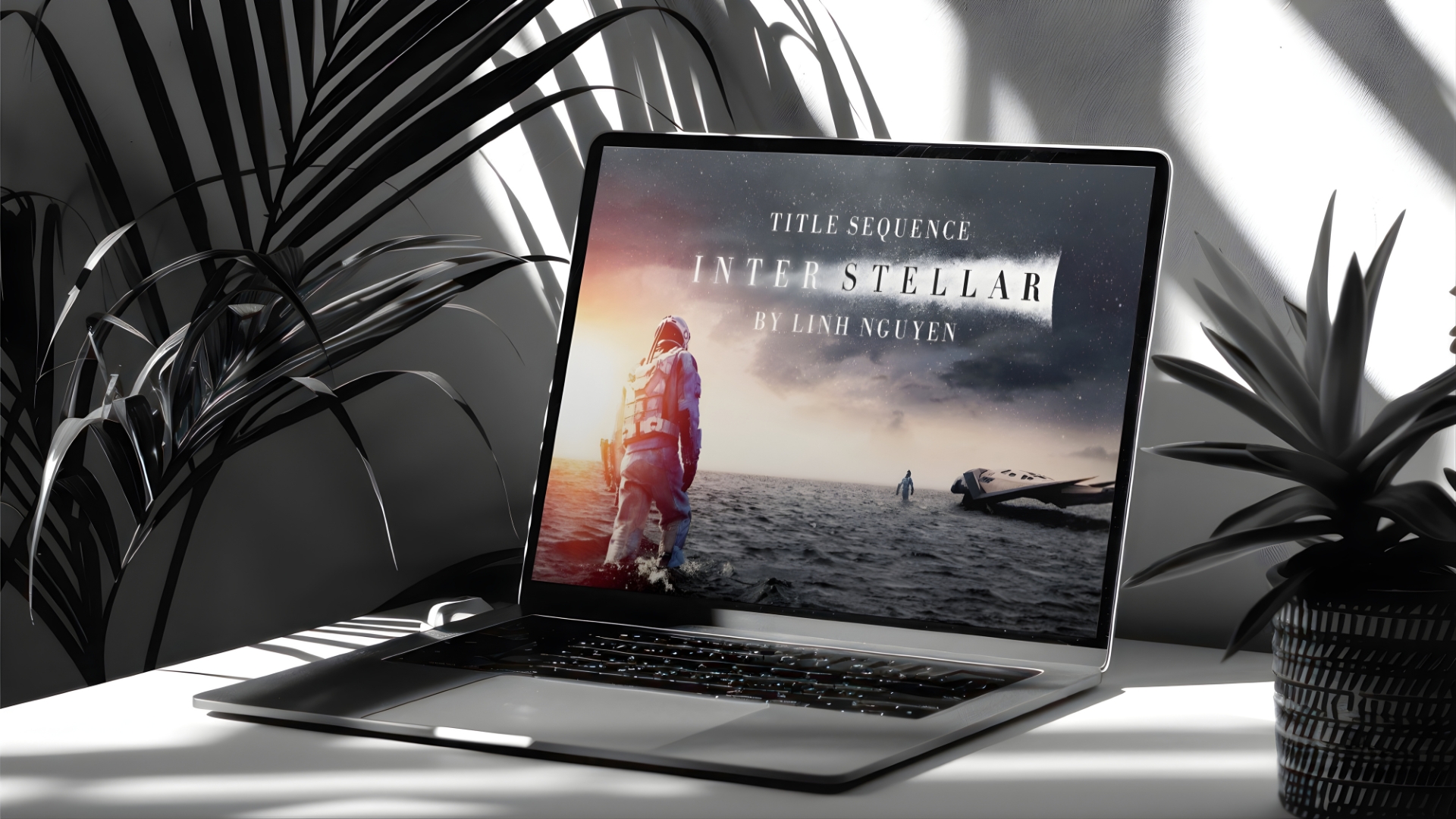
Interstellar Title Sequence is a motion design project that reimagines the cinematic language and emotional depth of the original film through a distinct visual interpretation. Inspired by Christopher Nolan’s Interstellar (2014), the concept draws from themes of space, time, and human connection.
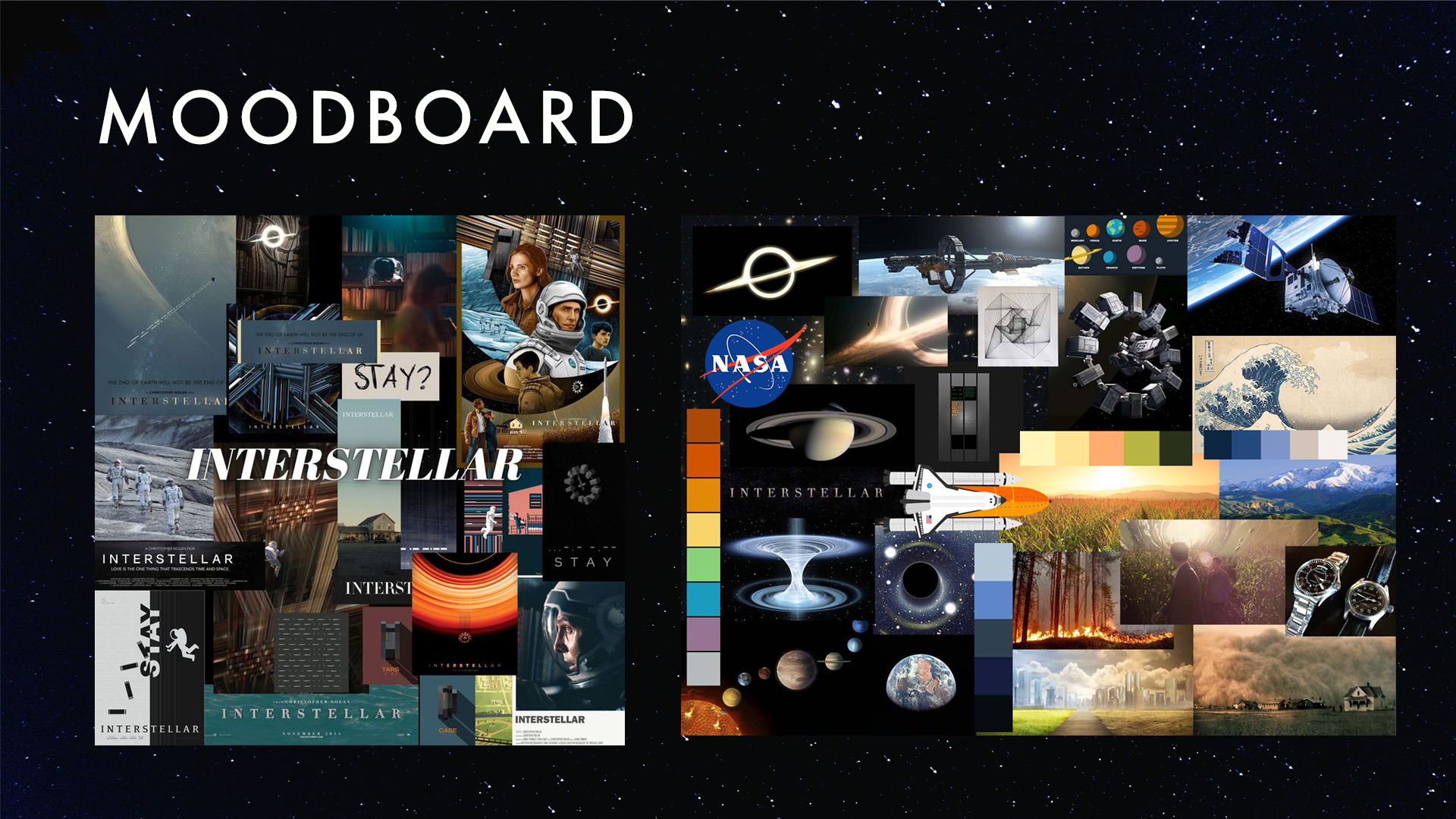
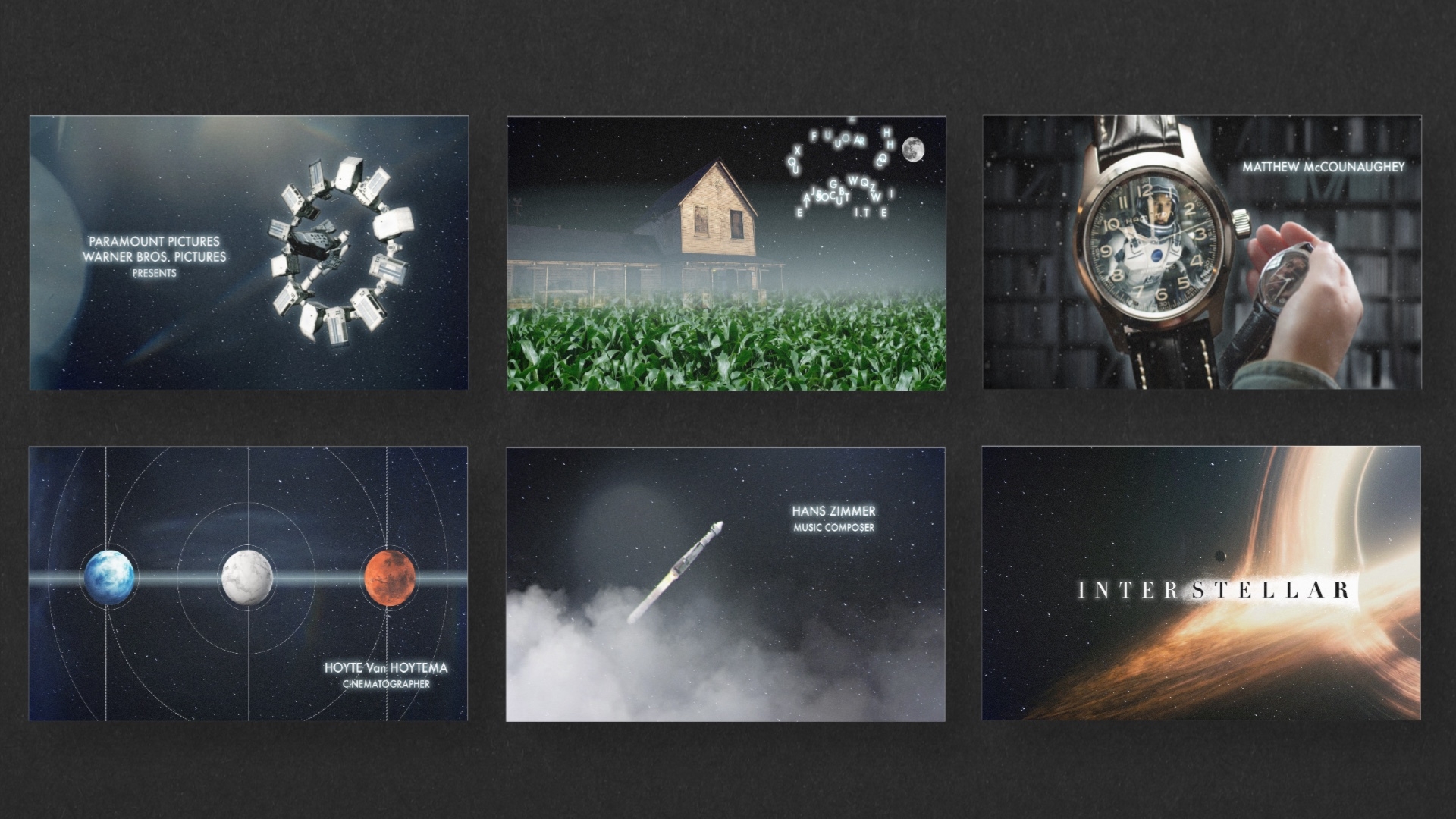
The sequence is built around translating key elements from the film into a series of stylized cinematic frames. Iconic visuals such as the Endurance spacecraft, the farmhouse and cornfield, the symbolic watch, and distant planets are reinterpreted to form a cohesive narrative. These elements represent both the scientific exploration of the universe and the emotional relationships at the core of the story.
The concept emphasizes the contrast between vast cosmic environments and intimate human moments, creating a balance between scale and emotion. Minimal compositions, strong visual hierarchy, and symbolic imagery are used to guide the viewer through the narrative while maintaining clarity and impact.
By focusing on atmosphere, storytelling, and visual cohesion, the project captures the essence of Interstellar while introducing a contemporary and original creative direction that reflects a modern approach to title sequence design.
ROLE
Motion Designer
DELIVERABLES
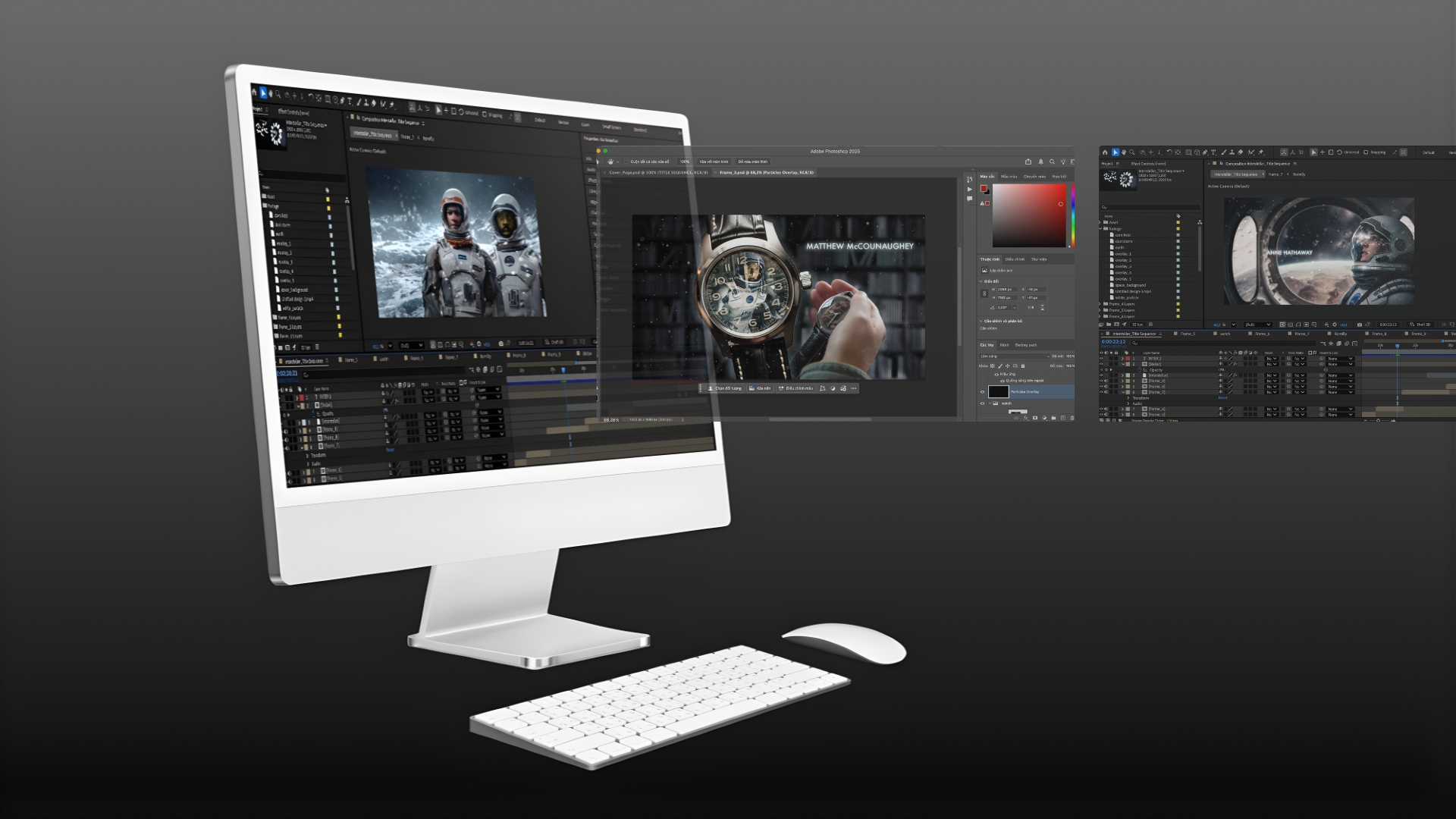
Styleframes & Visual Concept Development, 2D Compositing & Layered Scene Construction, Cinematic Title Sequence Animation, Typography Design & Animation, Camera Movement & Cinematic Transitions, Visual Effects & Overlay Integration
GOALS
1. Create a cinematic title sequence that captures the core themes of Interstellar, focusing on space, time, and human connection through visual storytelling.
2. Translate complex narrative elements into clear and engaging visual compositions, using symbolism and imagery to guide the viewer’s understanding.
3. Develop a cohesive visual direction that balances minimalism and cinematic depth, reflecting both the vastness of space and intimate human moments.
4. Design and animate typography that supports pacing, visual rhythm, and narrative progression within the title sequence.
5. Incorporate animated visual elements, including image-based motion and camera movement, to enhance depth, continuity, and overall cinematic experience.
CHALLENGES
1. Managing a large amount of visual content and references, requiring careful selection and organization to maintain clarity and avoid overwhelming the composition.
2. Balancing inspiration from the original film with a unique visual direction, ensuring the sequence feels both recognizable and original.
3. Creating a cohesive visual language from multiple 2D image sources, including challenges in compositing, color consistency, and seamless integration between elements.
4. Establishing a clear narrative flow using only visual elements and symbolism, without relying on dialogue or explicit storytelling.
5. Maintaining smooth pacing and visual continuity while combining static imagery with animated elements and camera movement.
Detail Shots
LEARNINGS
1. Developed the ability to effectively combine imagery, motion, and composition to communicate narrative and highlight key visual moments.
2. Gained experience in creating a cohesive visual identity that aligns with a cinematic concept and supports storytelling.
3. Improved skills in managing and organizing large amounts of visual content, ensuring clarity and consistency throughout the sequence.
4. Learned how to create motion from static imagery, including applying camera movement and animation techniques to add depth and cinematic perspective.
5. Strengthened understanding of visual balance, hierarchy, and composition within a motion-based project, ensuring a clear and engaging visual flow.
RESULTS
1. Produced a complete cinematic title sequence that effectively translates the core themes of Interstellar into a cohesive visual experience.
2. Developed a consistent set of styleframes that establish a clear visual direction, ensuring harmony in composition, tone, and atmosphere.
3. Successfully combined 2D compositing, typography animation, and camera movement to create depth and a sense of cinematic space.
4. Created a structured visual flow that guides the viewer through the sequence, balancing large-scale cosmic elements with symbolic storytelling.
5. Delivered a polished final result that demonstrates strong understanding of cinematic design principles and motion-based storytelling.